ServicesCarpet Tile
Carpet Tile Installation in Stafford
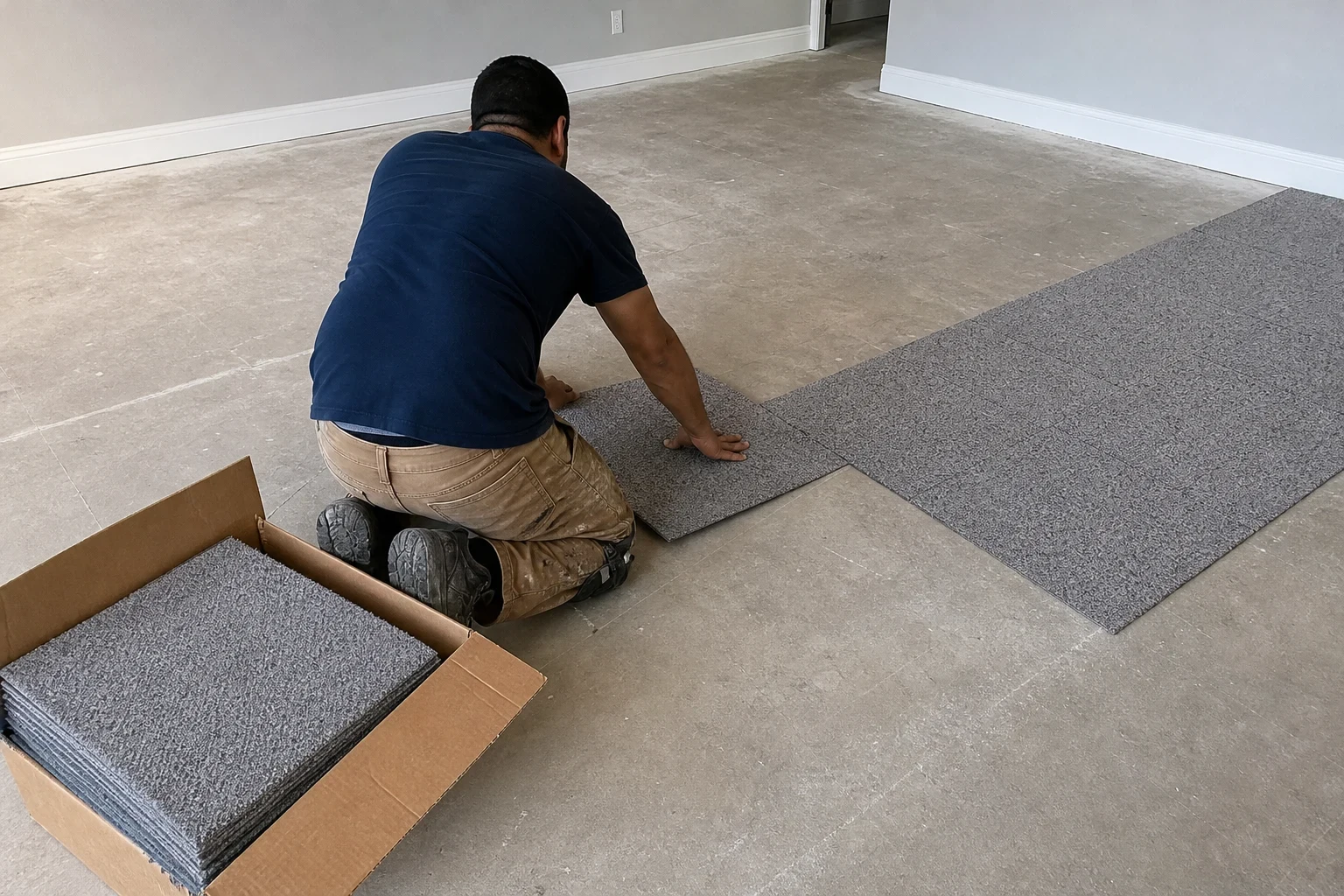
Carpet tile gives you soft floor that comes apart in squares. Stain one, and you replace one. We check your slab for moisture, pick the adhesive the tile maker calls for, and set each transition so nobody trips. We also tell you plainly if a permit applies.
What Carpet Tile Is Good For
Carpet tile is carpet cut into squares or planks, usually 18 or 24 inches, with a firm backing. It is not stretched over pad like wall-to-wall. Each piece is held down with a release adhesive or tabs, so you can lift it later.
It fits rooms that take a beating. Game rooms, home offices, playrooms, a converted garage, a closet you want to stay soft. Kids and pets spill. A dog has an accident. You pull that one tile, set a spare from the box we leave you, and the floor looks right again.
If you want plush comfort in a bedroom, regular carpet installation over pad is the better call. We will tell you which one fits the room before you spend anything.
What the Job Includes
Slab moisture check
Most homes around here sit on concrete slabs. We test for moisture before anything goes down, because a wet slab breaks down adhesive and the tiles start to curl at the corners.
Removing the old floor
We pull the old carpet, pad and tack strip, scrape glue and fill tack holes. If we find old sheet vinyl or tile that could hold asbestos, we stop and tell you before anyone disturbs it.
Floor prep and patching
Carpet tile shows every dip and ridge in the slab. We grind high spots and fill low ones with patch so the squares sit flat and the seams stay tight.
The right adhesive
We use the release adhesive or tab system the tile maker specifies. Using the wrong one can void the product warranty and makes future swaps hard.
Layout and pattern
We start from the center of the room so the cut pieces at the walls are even. You choose monolithic, quarter-turn or brick-style, and we follow the arrows on the backing every time.
Transitions and cleanup
We set reducer or edge strips where carpet tile meets tile, wood or vinyl, keep the change in height low, and haul away the old flooring and scrap.
Signs Carpet Tile Makes Sense
Stains keep coming back
You have cleaned the same spots in the game room for years. With squares, a bad spot means one new tile, not a new room.
Old carpet smells
Pet odor soaks into pad. Carpet tile has no separate pad to hold it, and a soiled piece comes right out.
Seams are splitting
Wall-to-wall in a high-traffic room ripples and opens at the seams. Glued-down tile does not need stretching, so it does not ripple.
You are converting a space
A garage turned into a gym or office often has a slab that sits a little low or uneven. Carpet tile goes down well once the slab is patched and leveled.
Furniture rolls on it
Office chairs crush plush carpet fast. Low, dense carpet tile holds up to casters much better.
How a Carpet Tile Job Runs
- 1
Measure and look at the slab
We measure the rooms, check the slab for moisture and level, and look at every doorway. You get a written estimate that lists removal, prep, materials and labor as separate lines.
- 2
Permit question answered
Swapping floor covering inside a home usually does not need a building permit. If the job touches framing, a garage conversion or anything structural, a permit may apply, and we tell you before we start.
- 3
Tear-out and prep
We cover what stays, move what we can, and take out the old floor. Then we patch and grind until the slab is flat and clean.
- 4
Lay the tile
We snap center lines, spread adhesive and let it tack up the right amount, then set tile in the pattern you picked. Most single rooms are done in a day.
- 5
Walk-through
We roll the floor, set the transitions, check door swings and walk it with you. You keep the leftover box of spares.
What Moves the Price
Carpet tile cost comes down to how much floor there is and what shape it is in under the old covering. We price it after we see the room and test the slab. The estimate shows each part, so you can see where the money goes.
- Square footage and layout
- Big open rooms go fast. Closets, angles and lots of doorways mean more cuts and more time.
- The tile you choose
- Tile weight, pile and backing type all change the material cost. Brick-style and quarter-turn patterns also waste a bit more.
- Slab condition
- A flat, dry slab needs little work. Cracks, old glue, high spots or high moisture readings add patching, grinding or a moisture-blocking primer.
- What comes out first
- Pulling carpet and pad is quick. Glued-down vinyl or old tile takes longer, and suspected asbestos changes the plan entirely.
- Doors and transitions
- Doors may need trimming to clear the new floor, and each change to another flooring type needs its own strip.
Carpet Tile Questions
Something not covered here? (346) 762-2976
Do I need a permit to put carpet tile in my home?
Usually not. Replacing floor covering in an existing room is generally treated as finish work. If the project is part of a garage conversion or any structural change, a permit and inspection may be required, and we will say so on the estimate.
Will carpet tile look like a grid of squares?
It depends on the pattern. Monolithic layout with low, dense tile blends together so you barely see the seams. Quarter-turn and brick patterns show the squares more on purpose.
Can I replace one tile myself later?
Yes. With release adhesive you lift the bad tile with a putty knife, press a spare into place, and match the arrow direction. Keep the spares from your install, since dye lots change over time.
Can carpet tile go on stairs?
We do not recommend it. Squares do not wrap a stair nosing safely, and loose edges there are a trip risk. Our stair flooring page covers the options that do work on steps.
How soon can we use the room?
You can walk on it the same day. Wait about a day before rolling heavy furniture or chairs across it so the adhesive sets.
Is carpet tile okay where it is humid?
The tile itself handles humidity fine. The real risk is moisture coming up through the slab, which is why we test before installing and use a moisture-tolerant adhesive or primer when readings call for it.
Ready for a Floor You Can Fix One Square at a Time
Tell us about the room and what is down now. We will set a time to measure, test the slab and walk you through the estimate line by line.