ServicesLuxury Vinyl Tile
Luxury Vinyl Tile Installation in Stafford
Luxury vinyl tile gives you the look of stone or ceramic with a softer, warmer surface that shrugs off water. We test the slab, flatten it to the manufacturer's spec and set every transition so doors swing and nobody trips. You hear what the job needs before we start.
What luxury vinyl tile is and when it fits
Luxury vinyl tile, or LVT, is a layered vinyl product cut into squares or rectangles instead of long planks. A clear wear layer sits over a printed stone, slate or concrete look. Most of what we install is rigid core click-lock. Some is glue-down, for rooms that see heavy rolling loads.
It's a good call for kitchens, baths, laundry rooms and entries, where water and dropped dishes are part of life. If you want a wood look, our Luxury Vinyl Plank page covers that. If you want real fired tile with grout, see Tile Flooring.
Now the plain part about rules. Swapping floor covering usually does not need a building permit. What does matter is the manufacturer's installation instructions. They spell out slab moisture limits, flatness and expansion gaps, and if those are skipped, the maker can deny a product claim. When a job touches plumbing or framing, we check what the city requires before we start.
What the work includes
Moisture test on the slab
Most homes around here sit on concrete slabs, and slabs hold moisture. We test before anything goes down and compare the reading to the product's limit. If it runs high, we talk about a vapor barrier or a different product.
Flattening and floor prep
Rigid tile shows every dip and hump. We grind high spots and fill low ones with patch or self-leveler until the floor meets the flatness the manufacturer lists.
Removing the old floor
We pull carpet, tack strip, old vinyl or ceramic and haul it off. Old sheet vinyl and its glue can contain asbestos. If we suspect it, we stop and tell you before anything is disturbed.
Layout and expansion gaps
We plan the grid so the cut tiles at walls aren't thin slivers and the pattern runs square to the main room. Floating floors get the gap the instructions call for at walls, cabinets and door frames.
Trims, transitions and doors
We fit reducers where LVT meets carpet or tile, undercut door jambs and trim doors that drag. Transitions are set low and solid so they don't turn into a trip edge.
Baseboard, toilets and cleanup
We reset or replace baseboard and quarter round. Toilets come up and go back down on a new wax ring. Rooms are swept and ready to use when we leave.
Signs it's time for luxury vinyl tile
Cracked or hollow ceramic
Tiles that sound hollow and grout that keeps cracking often mean the old floor came loose from the slab. LVT is easier on your feet and won't crack from a dropped pan.
Sheet vinyl curling at the edges
Lifting at the tub or dishwasher usually means water got under it. That's a good time to check the slab and move to a floor with a real wear layer.
Carpet in a wet room
Carpet in a bath or laundry room holds moisture and odor. Tile-look vinyl wipes clean.
A floating floor that buckles
Peaking at doorways or seams opening up usually means the old floor was pinned under cabinets or laid without gaps. We fix the cause when we put in the new one.
Thresholds people trip on
A raised edge that keeps catching toes is a safety problem. Redoing the floor is the time to set it right.
How an LVT job runs
- 1
Phone call and walk-through
You tell us the rooms and what's on the floor now. We set a time to measure, test the slab and look at doorways, cabinets and toilets. Then you get a price broken out by material, prep and labor.
- 2
Delivery and acclimation
Material arrives a day or two early and sits in the room at normal living temperature, as most makers require. Keep the AC running like you usually do.
- 3
Tear-out and prep
We protect walls and the path in, remove the old floor and do the grinding and patching. Leveler has to cure before tile goes over it, so prep can take its own day.
- 4
Install and trim-out
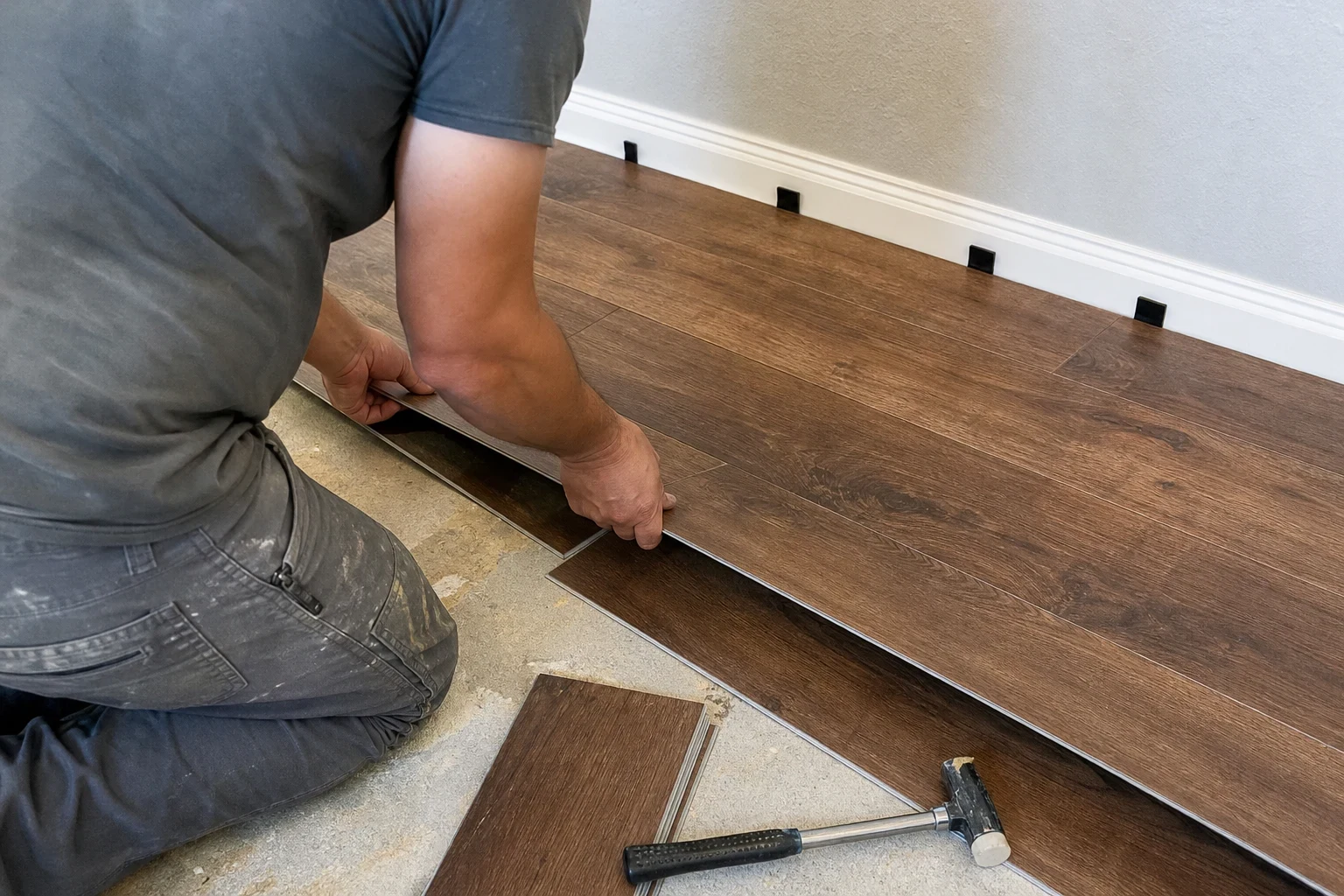
Tiles go down from a straight reference line. We fit trims, reset toilets and baseboard, and check that every door swings clear.
- 5
Walk the floor together
We go room by room with you, show you the transitions and go over care. A floating floor can be walked on right away. Glue-down needs the cure time on the adhesive label.
What moves the cost of luxury vinyl tile
Two jobs with the same square footage can price very differently. Most of the difference is below the surface. Your estimate breaks out prep, material and labor separately, so you know what each part of the job costs before we start.
- Product and wear layer
- Thicker wear layers and rigid cores cost more than thin glue-down tile. In a busy kitchen or a house with dogs, the thicker layer often earns its keep.
- Slab condition
- A flat, dry slab needs little work. Cracks, dips or high moisture readings add leveler, patch or a vapor barrier.
- What comes out first
- Pulling carpet goes quickly. Breaking up ceramic set in mortar takes more labor and more haul-off.
- Room shape and cuts
- Closets, angled walls, islands and lots of doorways mean more cuts and more trim pieces.
- Toilets, baseboard and appliances
- Resetting toilets, moving the fridge or replacing baseboard each add time to the job.
Luxury vinyl tile questions
Something not covered here? (346) 762-2976
Do I need a permit for luxury vinyl tile?
Usually not. Replacing floor covering is generally treated as a finish change. If the job involves plumbing changes, framing or subfloor repair, the rules can differ, and we check with the city before work starts. The manufacturer's install instructions always apply, and we follow them.
Can LVT go right over my existing tile?
Sometimes. The old tile has to be stuck down tight and flat, and grout lines may need a skim coat so they don't show through. The added height can cause trouble at doors, the dishwasher and transitions to other rooms. We check all of that at the walk-through and tell you if tear-out makes more sense.
Is luxury vinyl tile waterproof?
The tile itself handles water well, and spills you wipe up are no problem. Water that runs past the edge, like a tub overflow, can get under a floating floor and sit on the slab. In bathrooms we seal the perimeter where the instructions allow it.
What's the difference between LVT and vinyl composition tile?
VCT is the hard, thin tile you see in schools and stores. It needs waxing and isn't as comfortable underfoot. LVT is thicker, has a printed look under a clear wear layer and only needs sweeping and damp mopping. Our Vinyl Composition Tile page explains when VCT still makes sense.
Will furniture and appliances dent it?
Rigid core resists dents better than flexible vinyl, but heavy point loads can still leave marks. Put felt pads on chair and table legs. Roll the fridge over a sheet of plywood instead of across bare tile, and we handle that part on install day.
How long does an LVT install take?
Most kitchens and baths are done in a day or two once prep is finished. Slab leveling can add a day for cure time. You get the schedule at the walk-through so you can plan around it.
Let's look at your floor
Tell us the rooms and what's down now. We'll come test the slab, measure and walk you through what the job needs, permits included.