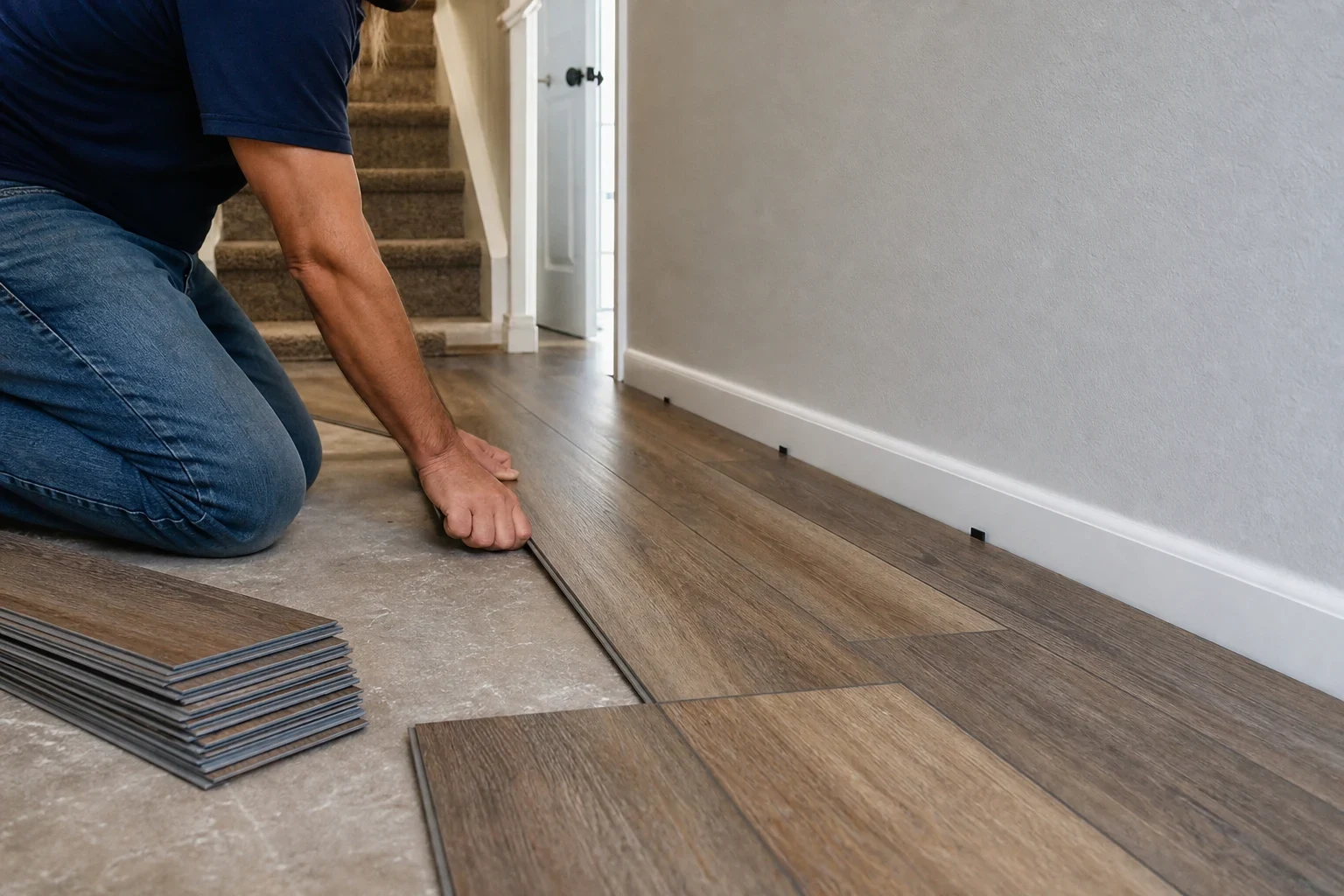
ServicesVinyl Composition Tile
Vinyl Composition Tile in Stafford
VCT is the hard-wearing tile you see in schools and stores. It works just as well in a laundry room, mudroom or playroom. We test the slab, deal with old tile the safe way and lay it flat, so it holds up for years.
What VCT Is and When It Makes Sense
Vinyl composition tile is made from limestone filler, vinyl resin and color chips pressed into 12-inch squares. It is stiff, cheap per square foot and very hard to wear through. It does not feel soft or warm like carpet, and it is not waterproof like luxury vinyl tile. It is the floor for rooms that take a beating.
It is the right call for a laundry room, a workshop, a back hall from the garage or a kids' craft room. If you want a softer, quieter floor that looks like wood or stone, Luxury Vinyl Tile or Luxury Vinyl Plank is usually the better fit, and we will tell you so.
Most floor covering swaps inside a house do not need a building permit. Some parts of the job still have rules, like safe handling of old tile, resetting fixtures and keeping door and threshold heights safe. We explain those before we start, in plain words.
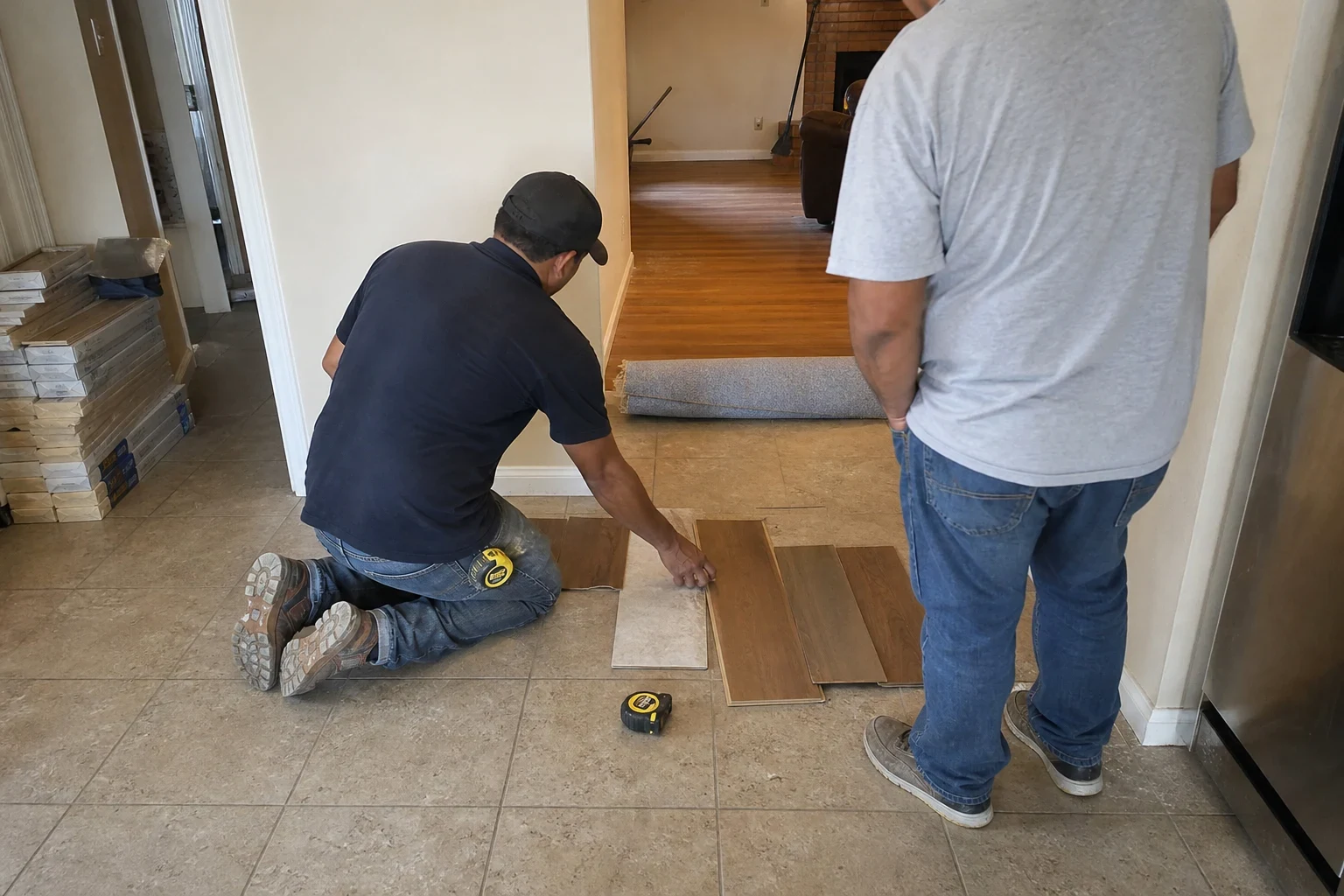
What the Work Includes
- 01
Moisture and level checks
We test the concrete for moisture and check it with a straightedge. VCT shows every dip and ridge under it, so this step matters more than the tile you pick.
- 02
Old floor review
If you have older 9-inch tile or black glue underneath, we stop and tell you. Those can contain asbestos. We recommend a lab test before anything is pulled, and we do not sand, grind or scrape suspect material.
- 03
Slab prep
We scrape off loose material, fill cracks and patch low spots with a cement-based compound. High spots get ground down where it is safe to do so.
- 04
Layout and setting
We snap center lines so the cut tiles at the walls come out even. Tiles go into the right adhesive for VCT and get rolled with a heavy roller so they bond fully.
- 05
Trim and transitions
We fit base, reducer strips and thresholds so the edge where VCT meets carpet or wood is low and does not catch a toe.
- 06
Cleanup and care notes
We haul off scraps and packaging and sweep the room. You get simple care notes on cleaning and keeping the surface finish in good shape.
Questions about Vinyl Composition Tile?
Call(346) 762-2976Signs Your Utility Floor Is Due for VCT
Cracked or loose tiles
Old tiles that rock, lift or snap at the corners usually mean the glue has let go. Patching one or two rarely lasts.
Worn-through sheet vinyl
Sheet goods in a laundry or back hall wear through at the door and in front of the machines. VCT stands up to that traffic much better.
Bare or painted concrete
A sealed or painted slab gets dusty, slick when wet and stains easily. VCT gives you a cleanable surface for far less than most floors.
Seams pulling apart
Gaps opening between tiles often point to moisture coming up through the slab. We test for that before laying anything new.
A room changing use
Turning a spare room into a workshop or a playroom is a good time to put down a floor that can take spills, rolling chairs and dropped tools.
How a VCT Job Runs
- 1
Look and measure
We come out, measure the room, test the slab and look at what is on the floor now. If old tile might contain asbestos, we say so right then and explain the testing step.
- 2
Written plan
You get a written quote that lists slab prep, tile, trim and any fixture work. If a toilet, sink or gas appliance has to move, we tell you who should handle reconnecting it.
- 3
Prep day
We move light furniture, pull the old floor where it is safe and prep the slab. Patch compound needs time to cure, so a bigger room may take a second day.
- 4
Setting day
We spread adhesive, let it tack up, set the tile and roll it. Most rooms can take foot traffic the same day, with heavy items kept off a little longer.
- 5
Walkthrough
We walk the floor with you, check edges and transitions, and go over care before we leave.
What Moves the Price
VCT is one of the lowest-cost floors per square foot, but the tile is rarely the biggest number. The condition of the slab and what has to come up first drive most of the price. We list each part separately so you can see where the money goes.
- Removing the old floor
- Pulling carpet or sheet vinyl is quick. Old tile and hard glue take much longer, and suspect asbestos material adds testing and, if it comes back positive, specialized handling.
- Slab condition
- Cracks, low spots and old adhesive all need work before tile goes down. Many Stafford homes sit on slab foundations that have shifted a bit over the years, which can mean more patching.
- Room size and shape
- Small rooms cost more per square foot because setup and trim take the same effort. Lots of corners, closets and door openings add cuts.
- Tile grade and pattern
- Standard colors cost less than special-order ones. A checkerboard or border pattern takes more layout time than a single color.
- Fixtures and appliances
- Pulling a toilet or moving a washer and dryer adds time. Plumbing or gas hookups may need to go to the right trade, and we sort that out with you while we put the quote together.
VCT Questions We Hear
Do I need a permit to put VCT in my house?
Usually not. Replacing floor covering inside a home is normally treated as finish work. If the job grows to include plumbing changes, moving walls or other structural work, that part may need a permit, and we will tell you before anything starts.
My old floor has small square tiles and black glue. Is that a problem?
It might be. Tile and mastic from older homes can contain asbestos. It is safest to have a sample lab tested before anyone disturbs it. If it tests positive, it should be handled by people trained for that work, and in some cases VCT can be laid right over it after prep.
Is VCT waterproof?
No. It handles spills and mopping fine, but standing water can get between the tiles and into the glue. For a full bath or anywhere water sits, we usually point people to Luxury Vinyl Tile or Tile Flooring.
Does VCT need waxing?
It does best with a coat of floor finish that gets topped up now and then. Some newer tiles come with a factory finish that needs less upkeep. We explain the options so you can pick the one that fits how much care you want to give it.
How long until I can use the room?
You can usually walk on it the same day. We ask you to wait a bit before rolling heavy appliances back in so the adhesive can set. Exact times depend on the glue and the slab.
Ready to Put Down a Floor That Takes a Beating
Give us a call with the size of the space and the kind of floor you have today. We will go over slab prep, any old tile and the code questions, so the plan is clear before day one.