ServicesTile Flooring
Tile Flooring in Stafford
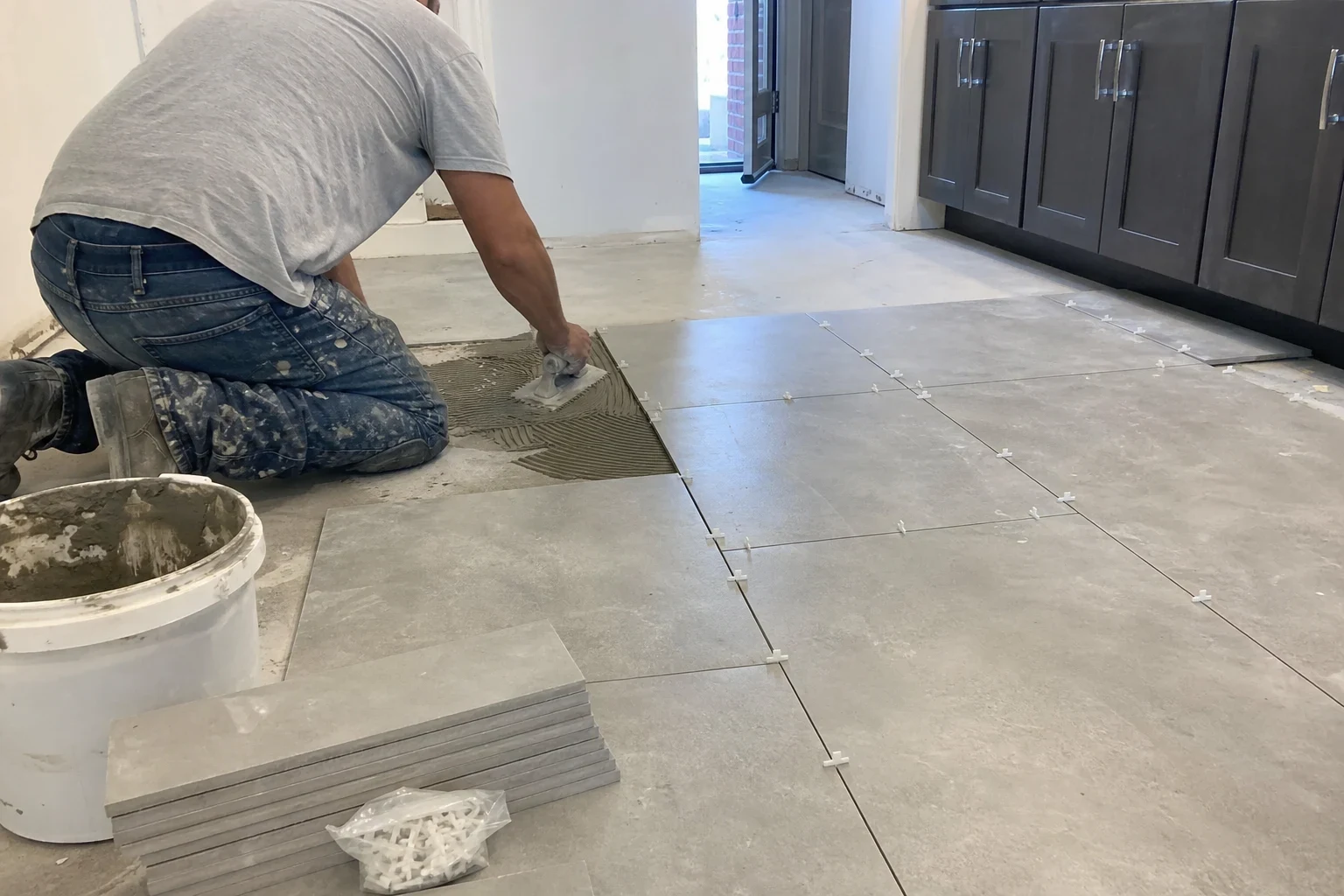
We install porcelain, ceramic and natural stone floors the way the industry standards call for. That means a flat, sound slab underneath, the right mortar for the tile, joints where the floor needs room to move, and a clear answer on whether your job needs a permit.
What a Tile Floor Needs to Last
Tile is hard, heavy and unforgiving. It does not bend. If the slab under it moves or dips, the tile cracks or the grout breaks loose. Most tile failures we tear out were not bad tile. They were bad prep, thin mortar or no movement joints.
So most of our work happens before the first tile goes down. We check the slab for cracks and high spots, flatten it, and lay a crack isolation membrane where it makes sense. Then we set the tile with the trowel size and mortar the tile maker specifies.
Here is the plain version on paperwork. Swapping one floor covering for another usually does not need city sign-off. Work that touches plumbing, like resetting a toilet flange at a new height, or repairing structure can. We check with the city before we start and tell you which side your job falls on.
What Our Tile Installs Include
Removal of the old floor
We pull up carpet, vinyl, laminate or old tile and haul it off. Old thinset gets ground down so the new tile sits on clean concrete.
Slab check and flattening
Large-format tile needs a very flat floor, or the edges sit uneven and you get lippage. We find the high and low spots with a straightedge, then grind or apply leveling compound.
Crack isolation membrane
Slabs on our clay soil crack over time. A membrane over existing cracks keeps that movement from telegraphing up through the tile.
Movement joints and perimeter gaps
Tile needs room to expand at walls and across large rooms. We leave the perimeter gap under the baseboard and add soft joints in big open areas, following the industry movement joint guidelines.
Toilet and transition work
New tile raises the floor. We reset toilets on the right flange height and fit transitions so doorways do not become trip spots.
Grout and cleanup
We grout, clean the haze off and explain how to seal cement grout if your tile uses it. Then we clean up the dust.
Signs Your Tile Floor Needs Replacing
- Cracks running across several tiles
- One cracked tile can be a dropped pan. A crack that runs in a line across tiles usually follows a slab crack underneath. Replacing tiles alone will not stop it.
- Hollow sound when you tap
- A hollow spot means the tile is not stuck to the mortar below it. It often comes from thin mortar coverage, and those tiles tend to crack under weight.
- Grout falling out
- Crumbling grout lets water get under the tile. In a bathroom or entry, that is the start of bigger trouble.
- Tented or lifting tiles
- Tiles pushing up in a ridge mean the floor had nowhere to expand. That is a missing movement joint problem, and the fix is a proper reinstall.
- Uneven edges you catch with your feet
- Lippage between tiles is a sign the floor was not flat enough. It gets worse with large tiles.
How a Tile Job Runs
- 1
Look at the floor and talk it through
We measure the rooms, check the slab and look at what is there now. We tell you what prep the floor will take and whether the city needs to be involved.
- 2
Demo and prep
We protect cabinets and doorways, tear out the old floor and grind or level the slab. Membrane goes down where cracks show up.
- 3
Layout and setting
We snap lines so cuts land at walls and doorways, not in the middle of the room. Tile goes down with full mortar coverage, and we lift a tile now and then to check it.
- 4
Grout, trim and resets
After the mortar cures, we grout, caulk the movement joints, set transitions and reset the toilet. Baseboards go back on.
- 5
Walkthrough
We walk the floor with you, point out the joints and tell you when it is safe for full furniture and foot traffic.
What Moves the Price of a Tile Floor
Tile cost depends more on the floor underneath and the tile size than on square footage alone. We look at the slab first so the number you hear by phone and in person covers the real work. If we find something during demo, we show you before we do anything about it.
- Tile size and type
- Big porcelain pieces show every dip, so the slab has to be flatter and each tile often takes two people to set. Stone means more cuts, plus sealing before and after grout.
- Slab condition
- Cracks, dips and old thinset add grinding, leveling and membrane work.
- What comes out first
- Pulling old tile is slower and dustier than pulling carpet or vinyl.
- Layout and cuts
- Diagonal or herringbone patterns, lots of doorways and small rooms all add cuts and time.
- Plumbing and permits
- Resetting toilets is routine. Moving a drain or flange may need a plumber and a permit, which adds to the job.
Tile Flooring Questions
- Do I need a permit to put in a tile floor?
- Usually not, if we are only replacing the floor covering. If the job involves moving plumbing or repairing structure, the city may need to sign off. We check before we start and tell you plainly what applies to your job.
- Can you tile right over my old tile?
- Sometimes, but we rarely recommend it. It raises the floor height at doors and appliances, and any loose or cracked tile underneath will fail the new floor too. We check the old tile first and give you a straight answer.
- How long until I can walk on it?
- Light foot traffic is usually fine the day after grout. Heavy furniture and appliances should wait a few more days while the mortar and grout cure. We give you the exact timing for the products we used.
- Porcelain or ceramic, which is better for my floor?
- Porcelain is denser and absorbs less water, so it holds up better in bathrooms, entries and busy kitchens. Ceramic costs less and works fine in drier rooms with lighter use. If you want a softer, warmer feel underfoot, luxury vinyl tile is worth comparing.
- Will my slab crack my new tile?
- Slabs move, and some crack. We cover existing cracks with an isolation membrane and leave movement joints so the floor can shift without breaking tile. That is the part many installs skip.
Ready to Talk About Your Tile Floor?
Tell us the rooms and the tile you have in mind. We will explain the prep, what the city needs to see, if anything, and the next step.