ServicesHardwood Flooring
Hardwood Flooring in Stafford
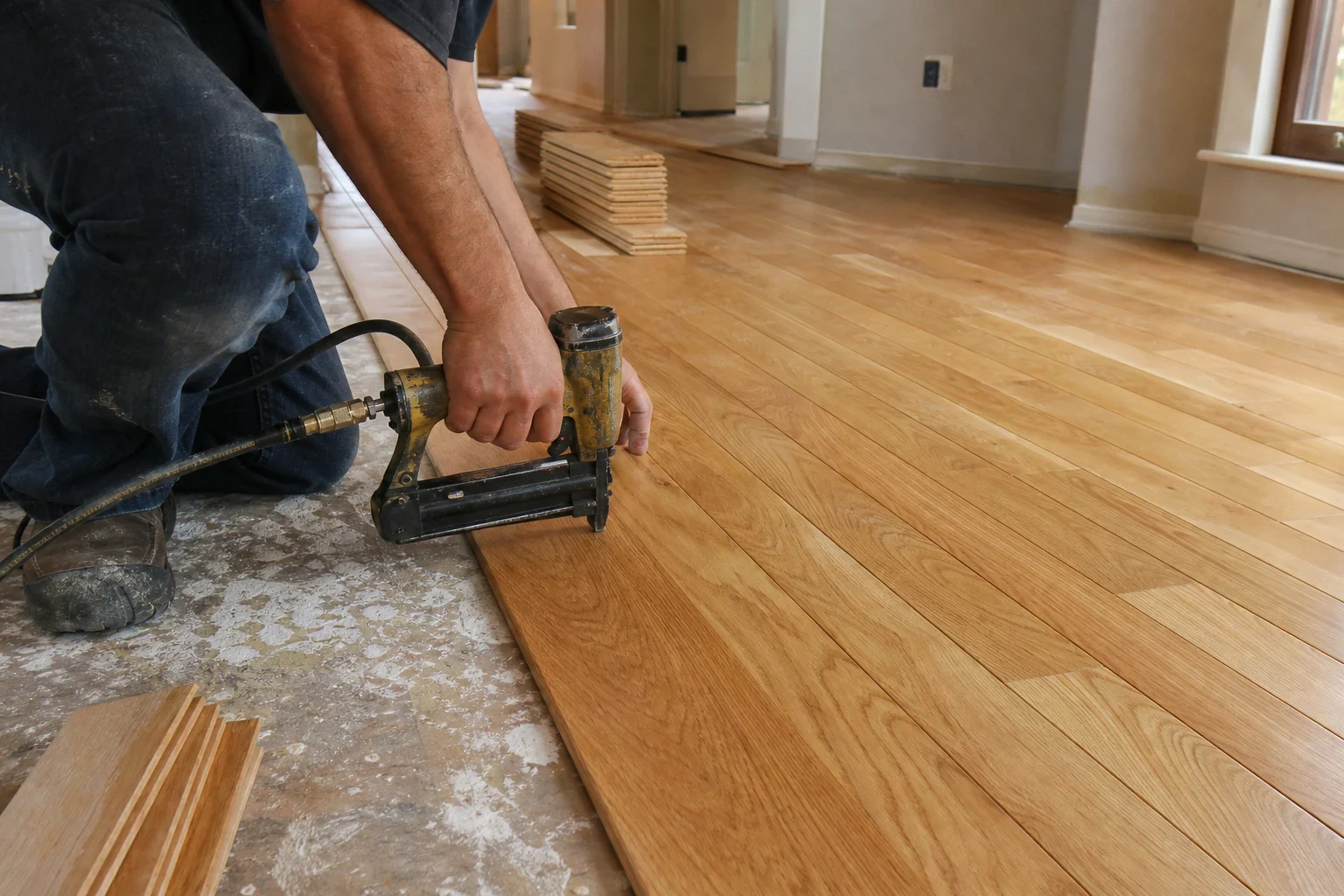
We install solid and engineered hardwood in your home. We test the subfloor for moisture first, pick the install method that fits it, and leave proper gaps and transitions so the boards don't cup, buckle or catch a door. You know the plan before we start.
When Hardwood Is the Right Floor
Hardwood is real wood. It's warm underfoot, it looks better as it ages, and it holds value when you sell. It also moves with humidity, so how it goes down matters as much as which boards you pick.
Most homes around here sit on a concrete slab. Solid hardwood nailed over slab is a poor match, so we usually recommend engineered hardwood glued down or floated over a vapor barrier. On a wood subfloor, solid boards nailed down are a good option. If your space stays damp or you have pets and kids running in from the yard, we'll tell you plainly if luxury vinyl plank or tile would serve you better.
A plain note on permits: replacing a floor usually doesn't need one. If your project also moves a wall, a toilet or a doorway, that part may. We'll tell you what applies before any work begins, so nothing gets flagged later.
What Our Hardwood Installs Include
- 01
Moisture testing
We test the slab or wood subfloor before any boards come in. If readings are high, we tell you and explain the fix. Laying wood over a wet slab is how floors cup in a year.
- 02
Acclimating the wood
Boards sit in your home before install so they adjust to your indoor air. How long depends on the product and the season. We follow the maker's install instructions, not a shortcut.
- 03
Subfloor prep
We grind high spots, fill low ones and fix squeaky or loose subfloor. Wood needs a flat base or it will flex and click.
- 04
Vapor barrier and underlayment
Over concrete we use a moisture barrier or a glue rated to block vapor. Over wood we use the underlayment the manufacturer calls for.
- 05
Expansion gaps and transitions
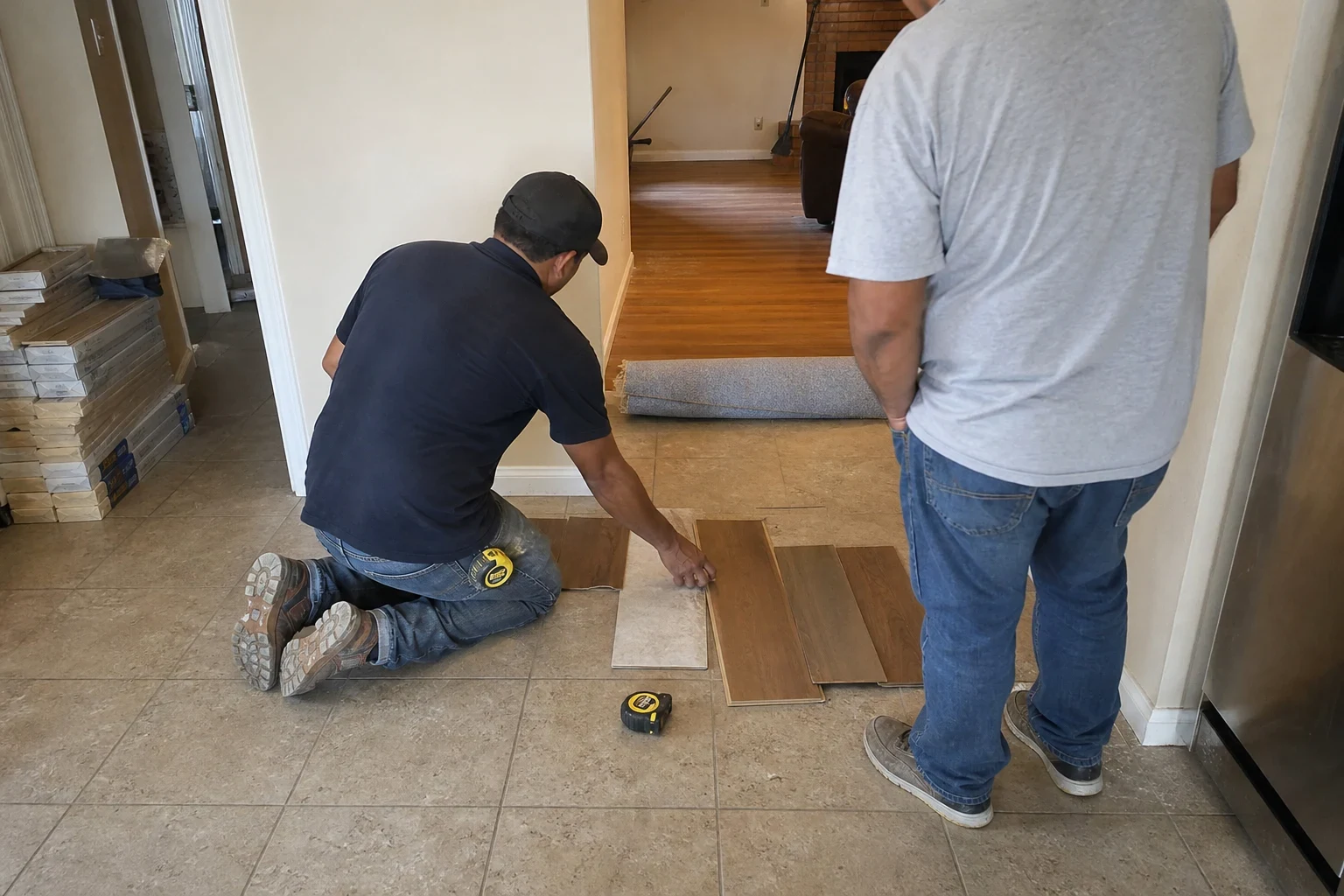
We leave the gap at walls the wood needs to move. Thresholds at tile, carpet and exterior doors are set so they sit flush and doors swing free.
- 06
Trim and cleanup
We reset or replace baseboards and quarter round, cut door casings for a clean fit and haul off the old flooring and scraps.
Questions about Hardwood Flooring?
Call(346) 762-2976Signs Your Floor Needs Replacing
Cupped or crowned boards
Edges higher than the middle, or the reverse, point to moisture trouble. If the boards have warped, they usually need to come out and the cause needs fixing first.
Gaps that keep growing
Some seasonal gapping is normal. Wide gaps year round mean the floor wasn't acclimated or the subfloor is moving.
Soft or bouncy spots
A floor that gives underfoot often has loose subfloor or water damage below. We check what's underneath before quoting.
Old carpet over a slab
Worn carpet is a common reason people call. Pulling it up is a good time to move to hardwood, as long as the slab tests dry.
Damage you can't spot fix
Deep pet stains, water marks or boards that have split through often can't be blended in. Replacing the area or the room is the honest answer.
How a Hardwood Job Runs
- 1
Look and measure
We come out, measure each room and test the subfloor. We talk through solid versus engineered and which method fits your home.
- 2
Written plan
You get the price, the products and any prep work in writing. If part of your project needs a permit, we say so here.
- 3
Tear out and prep
We cover vents and doorways to keep dust down, pull the old floor and get the subfloor flat and dry.
- 4
Install
Boards go down glued, nailed or floated, depending on your subfloor. We mix boards from several boxes so color looks natural, not patchy.
- 5
Trim and walk-through
Baseboards and transitions go back on. We clean up and walk the floor with you before we leave.
What Moves the Price of Hardwood
Hardwood prices swing more than most floors. The wood itself is one part. Prep, layout and trim work can matter just as much, and we spell each one out in your quote.
- Solid or engineered
- Species, board width and wear layer thickness all change the material cost. Wider boards and thicker wear layers cost more.
- Subfloor condition
- A flat, dry slab is quick. Grinding, leveling or moisture treatment adds labor and material.
- Install method
- Glue-down over concrete takes more time and adhesive than floating. Nail-down over wood falls in between.
- Layout and rooms
- Open, square rooms go fast. Lots of closets, angles, a herringbone pattern or many doorways add cuts and time.
- Tear out and trim
- Removing tile costs more than pulling carpet. New baseboards, stair work and extra transitions add to the total.
Hardwood Flooring Questions
Can you put hardwood on a concrete slab?
Yes, but usually engineered hardwood, not solid. We glue it down with a vapor-blocking adhesive or float it over a moisture barrier. We test the slab first so we know it's dry enough.
Do I need a permit to replace my floors?
Usually not for flooring alone. If you're also moving a wall, relocating plumbing or changing a doorway, that work may need one. We'll tell you up front and won't start work that should be permitted without it.
How long does an install take?
Most rooms take a few days once the wood has acclimated. Tear out and slab leveling can add time. We'll give you a schedule in the written plan so you can plan around it.
Can we stay in the house during the work?
Yes. We work room by room where we can and keep a path open. Glue-down jobs have an odor and need a day before heavy furniture goes back.
Will the new floor be higher than my tile or carpet?
Sometimes slightly. We use the right transition piece so the edge is low and doesn't trip anyone. If a door drags, we trim it.
Do you also do stairs?
Yes. Our stair flooring work matches treads and nosing to your new hardwood so the stairs and floor read as one job.
Ready to Talk Hardwood?
Tell us the rooms and what's down now. We'll set a time to come test the subfloor and give you a written plan.