ServicesStair Flooring
Stair Flooring in Stafford
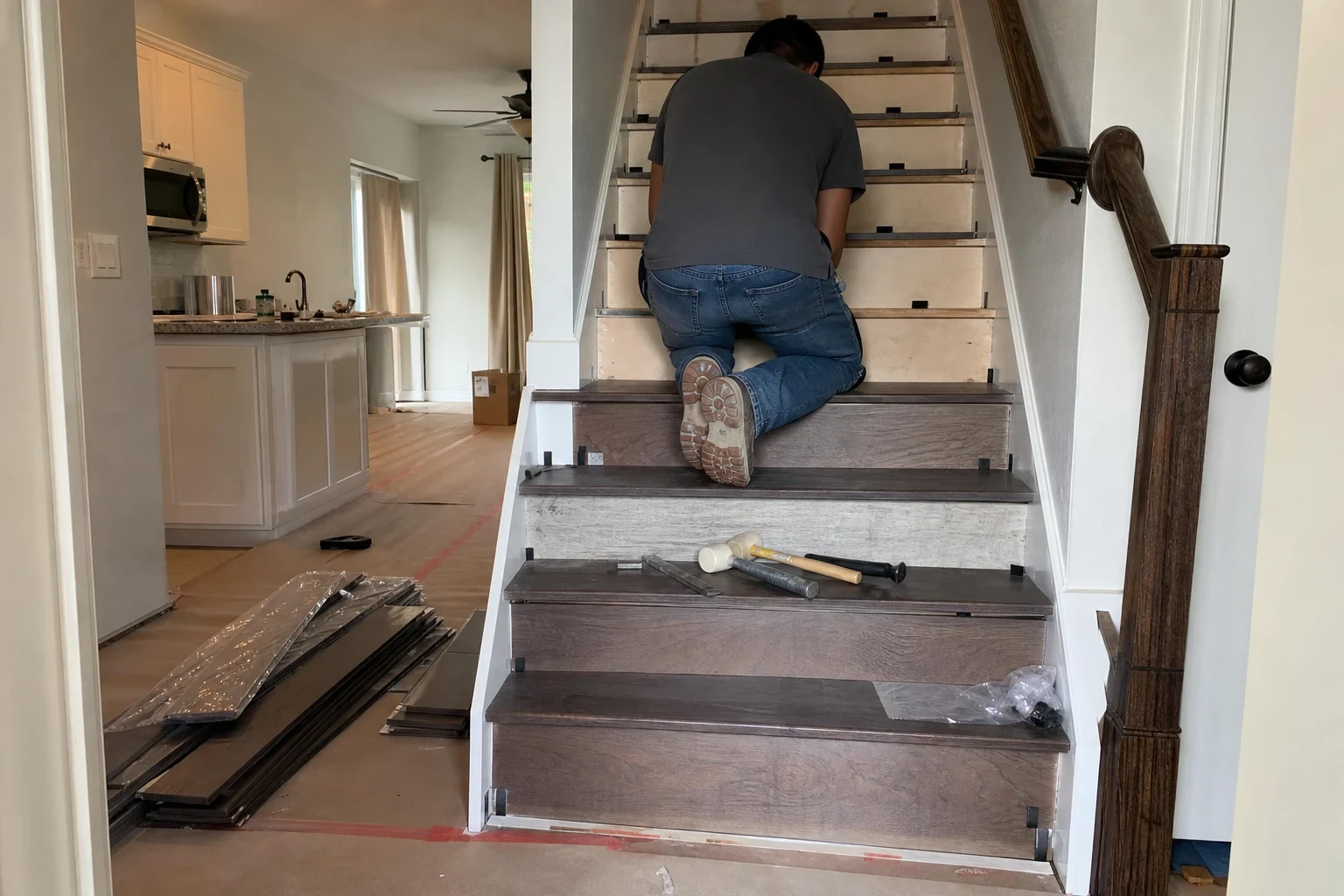
We cover stairs in hardwood, vinyl plank, laminate or carpet. Before we start, we measure every step, because new flooring changes step heights. When we leave, your stairs match the floors around them, feel solid underfoot and stay within the residential code for rise and nosing.
Stairs Are Not Just a Small Floor
A stair takes more care than a room. Each step has a tread, a riser and a nosing, and each one gets cut and fit by hand. The bigger issue is height. If a new floor adds half an inch at the bottom of the flight, that first step is now shorter than the rest.
The residential code allows only 3/8 inch of difference between the tallest and shortest riser in a flight. That rule exists because people trip on an odd step. We plan the new material around it, so the top and bottom steps stay in line with the others.
Most stair covering work does not need a permit. If your job turns out to involve rebuilding stringers or changing the layout, we will tell you plainly and explain what the city will want to see before we go further.
What the Work Covers
Tear-off down to the frame
We pull old carpet, pad, tack strip and staples, or the old tread caps. Then we look at what is underneath before we choose how to fasten anything.
Treads, risers and nosings
We install matching treads and risers in the material you pick. Nosings are fit so they project the right amount past the riser and give your foot a clean edge.
Fixing squeaks and loose steps
Loose treads get glued and screwed to the stringers before new material goes on. Covering a squeak only hides it for a while.
Height planning at the top and bottom
We work out how the stair meets the hallway upstairs and the floor at the bottom. Trim, thresholds and landings get matched so the transitions are flat.
Work around railings
We cut neatly around balusters and newel posts. If a baluster has to come out for the work, we put it back and make sure it is tight.
Signs Your Stairs Are Due
Carpet worn through on the edges
The nosing takes the most traffic. Bare backing or a shiny flattened edge means the carpet is done, and loose carpet on a stair edge is a slip risk.
Steps that creak or shift
A tread that moves when you step on it has come loose from the frame. That is worth fixing soon, not just for the noise.
One step feels off
If people catch a toe on the top or bottom step, the rise is probably uneven. That often happens after an earlier floor job raised the hallway or the first floor.
New floors that stop at the stairs
You put in new floors downstairs, and now the old carpeted stairs look out of place. We can match or complement what you have.
Slick or chipped treads
Worn finish, chipped laminate caps or cracked edges make a stair harder to use safely, especially in socks.
How a Stair Job Runs
- 1
Measure every step
We measure the rise and run of each step, not just one, and check how level the treads are. You get a clear picture of any step that is already out of line.
- 2
Pick the material and the plan
We go over which materials suit your stairs and how each one will change step heights. You know what will happen at the top and bottom before we cut anything.
- 3
Tear-off and repair
We remove the old covering, tighten loose treads and fill or shim where the frame is uneven. Floors at the base get covered to catch dust.
- 4
Install step by step
Each tread and riser is cut to fit its own spot, since no two steps are quite the same. Most flights take one to two days depending on material and shape.
- 5
Final check and cleanup
We walk the stairs, recheck the risers and look at every nosing. Scraps, staples and dust leave with us.
What Moves the Price
Stairs are priced by the step and by how much hand-fitting each one needs. A straight flight with closed sides is the simplest. We give you the price by phone once we know the details.
- Number and shape of steps
- More steps means more labor. Winders, pie-shaped turns and landings take longer to cut and fit than a straight run.
- Material you choose
- Solid hardwood treads, vinyl plank with stair nosing, laminate caps and carpet all differ in material cost and install time.
- What is underneath
- Many stairs built for carpet have rough plywood or particleboard treads. Those often need to be capped or replaced before a hard surface can go on.
- Open sides and railings
- An open side needs a finished return on each tread. Working around a lot of balusters also adds time.
- Height corrections
- If the top or bottom riser is out of line, fixing it takes extra work. We point this out when we measure, so it is never a surprise later.
Stair Flooring Questions
Something not covered here? (346) 762-2976
Can you put vinyl plank on my stairs?
Yes. We use matching stair nosing so the front edge is solid and finished. It works well when you have luxury vinyl plank downstairs and want the stairs to match. The treads underneath have to be solid and flat first.
Do I need a permit to redo my stairs?
Swapping the covering on existing stairs usually does not need one. Rebuilding stringers, moving the stairs or changing the railing can. If your job heads that way, we tell you before any work starts and explain what the city will check.
Why does my bottom step matter so much?
Adding a new floor at the bottom of the flight raises the floor and shortens that first step. The code limits the difference between risers to 3/8 inch. We plan for it so the steps stay even.
Can we still use the stairs during the job?
Mostly, yes. We leave a safe path when we can. With glued treads, there may be a few hours when we ask you to stay off certain steps.
Should the stairs match my floors?
Not always. Some people match the stairs to the hallway upstairs, and others match the first floor. We bring samples next to both so you can see how they look in your home.
Ready for Stairs That Feel Right Underfoot
Tell us how many steps you have and what is on them now. We will talk through materials, step heights and what the job involves.